Introduction
A dedicated fax line has traditionally meant one thing: a physical phone line reserved solely for sending and receiving faxes, tied to a single machine at a single desk. That definition is getting harder to maintain.
Major carriers are actively retiring copper POTS (Plain Old Telephone Service) infrastructure across the US. In many areas, new POTS installations simply aren't available anymore.
Businesses that assumed "keep the fax line" was the default option are finding that choice has already been made for them.
You'll get the three trends reshaping dedicated fax lines in 2026, the forces driving the shift, and a clear way to decide what your business actually needs going forward.
Key Takeaways
- Major carriers’ POTS retirement is pushing businesses off traditional dedicated fax lines
- VoIP fax lines let you keep existing machines without relying on aging copper
- Virtual/cloud fax numbers cut hardware and monthly line costs for most businesses
- Regulated industries still need fax—usually through compliant digital channels, not copper
Key Trend 1: Carriers Are Retiring POTS Lines, Forcing the Fax Line Decision
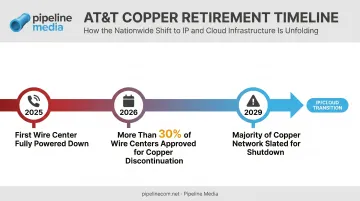
Copper is on its way out. AT&T's 2025 annual report confirms the company fully powered down its first wire center in 2025 and secured approval to discontinue copper services in more than 30% of its wire centers by the end of 2026. A large majority is slated for shutdown by 2029. Verizon and CenturyLink have filed similar location-specific copper retirement notices in recent years.
For businesses still running fax over copper, this shows up in a few practical ways:
- Rising monthly line costs as carriers push customers toward IP alternatives
- Harder-to-source replacement parts for aging analog fax hardware
- Fewer technicians trained to repair legacy copper circuits
One facilities-management trade report described hospitals inventorying hundreds of fax machines during POTS transitions. One facility discovered it had been paying for a copper line that was literally walled up and forgotten. That's not an isolated scenario. It's what happens when infrastructure sits untouched for a decade and then suddenly needs to move.
Why This Matters Beyond Fax
This isn't unique to fax circuits. It mirrors the broader retirement of analog voice lines across the industry. POTS used to be the default option nobody thought twice about. Now every business with fax needs has to actively choose a replacement path instead of renewing the same line year after year.
Key Trend 2: VoIP Fax Lines Are Bridging Legacy Hardware to Modern Networks
A VoIP fax line uses the T.38 protocol to carry fax tones over an internet connection, typically through an analog telephone adapter (ATA) that connects your existing fax machine to an IP network instead of copper wire. Your machine doesn't change. The transport underneath it does.
Businesses that already moved phone systems to VoIP often extend that same infrastructure to fax. It becomes a natural next step rather than a separate project.
Reliability still depends on internet quality and correct T.38 setup. Cisco's troubleshooting docs note that Error Correction Mode has roughly a 2% tolerance for jitter and packet loss. On a weak link, that shows up as dropped pages or failed sends.
VoIP fax works best when you have:
- A business-grade wired connection (not consumer Wi-Fi)
- Proper T.38 configuration end to end
- Network conditions stable enough for low jitter and packet loss
Monthly cost is usually lower than legacy POTS fax, since carriers are deprioritizing copper maintenance in favor of IP. That shift is what the FCC's 2026 order was built to speed up: less regulatory friction for leaving legacy networks.
For compliance-heavy teams, the draw is practical. Keep the fax machines and workflows staff already know, and step off copper before support thins and prices climb further.
Key Trend 3: Cloud and Virtual Fax Numbers Are Becoming the Default
A virtual, or cloud, fax number is a real, dialable fax number with no physical line attached. Faxes are sent and received through an app, email inbox, or web browser instead of a machine sitting on a desk.
This model has become the default for a growing share of businesses, and the market data backs it up.
The global fax services market was valued at $3.31 billion in 2024 and is projected to reach $4.48 billion by 2030. Cloud-based fax is already the dominant segment, with North America leading adoption.
Real-world use cases are straightforward:
- Remote and distributed teams that need fax access from any location
- Small businesses that only send the occasional fax and don't want hardware overhead
- Departments that need fax capability without dedicating a phone line to it
Pipeline Media's Fax-to-Email service shows how practical this shift has become. Businesses can send and receive faxes from any device for as low as $10 per month with no setup fee, choosing a number from almost any US or Canadian city.
Even high-volume outbound needs don't require a dedicated line anymore. Pipeline's managed fax broadcasting can process over 1 million pages per hour entirely through the cloud, with automatic retries on problem numbers and delivery reports showing exactly what succeeded and what didn't.
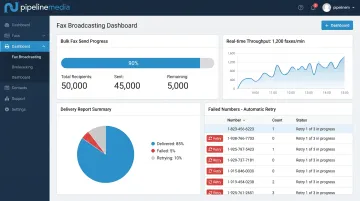
That combination removes the two biggest pain points of dedicated lines: hardware costs and monthly line rental. It also adds what copper never offered: delivery tracking and access from multiple devices at once.
What's Driving the Shift Away From Dedicated Fax Lines
Several forces are converging—and reinforcing each other.
- Technology advances — Cloud infrastructure and broadcast fax platforms now handle transmission volumes that once required racks of physical lines and equipment
- Market demand — Distributed and remote workforces need fax access from any device, not tied to one office location
- Cost pressures — Per-line maintenance on aging copper networks keeps climbing, while cloud subscriptions stay flat and scalable
- Regulatory influence — HIPAA guidance from HHS already permits faxing protected health information when reasonable safeguards are in place
- Carrier dynamics — AT&T spends roughly $6 billion a year operating its copper network, giving carriers a direct incentive to retire those lines
Healthcare hasn't abandoned fax either. A 2026 MGMA poll found 73% of medical practices had digital fax fully integrated with their EHR or practice-management workflow. Regulated industries aren't dropping fax—they're running it through modern channels instead of a physical line.
What This Means for Your Business
The "do I need a dedicated fax line" question now comes down to volume, compliance requirements, and existing infrastructure rather than habit or inertia.
Operational Impact
Fax workflows are shifting from a single machine tied to one desk toward shared inboxes and delivery-tracking dashboards. Anyone on an authorized team can send or receive a fax from a laptop or phone, whether they're in the office or traveling.
Business Impact
Budget priorities are shifting too. Instead of line rental and maintenance fees that climb every year, businesses are shifting toward predictable subscription pricing. That frees budget for other outreach channels, such as email campaigns or paid advertising.
Decision Checklist & Outlook
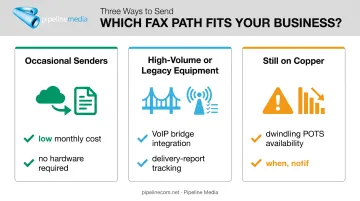
- Occasional senders with no legacy compliance mandate: A virtual fax number is usually enough. No dedicated line, no hardware, minimal monthly cost.
- High-volume senders or teams on legacy equipment: VoIP fax works as a bridge, or a full-service provider can handle broadcasting and delivery reporting end-to-end.
- Organizations still faxing over copper: POTS availability will keep shrinking through 2026 and beyond. For nearly every shop in this group, the dedicated-line decision is "when," not "if."
Frequently Asked Questions
Do I need a dedicated fax line for a fax machine?
A fax machine needs some kind of line to function, but not necessarily a traditional dedicated POTS line. A VoIP adapter or a virtual fax number can serve the same purpose at a lower monthly cost.
Do fax lines still exist?
Yes, fax lines still exist, though traditional copper POTS fax lines are being actively phased out by major carriers. VoIP and virtual cloud fax numbers are becoming the modern standard.
What is a secure fax line?
A secure fax line uses encryption, access controls, and audit trails to protect transmitted documents. Many cloud fax services now build these protections in with HIPAA compliance features.
How much does a dedicated fax line cost in 2026?
POTS lines generally run around $20 to $50 per month plus setup fees. VoIP fax typically costs $10 to $25 per month. Virtual fax numbers start around $10 per month depending on volume, such as Pipeline Media's Fax-To-Email plans.
Can I send a large volume of faxes without a dedicated line?
Yes. Fax broadcasting services can transmit documents to large recipient lists entirely through the cloud. Pipeline Media's fax broadcast service, for example, processes over 1 million pages per hour with no dedicated line required.
Is fax still relevant for businesses in 2026?
Fax remains relevant, especially in healthcare, legal, finance, and government, where compliance and traceability matter most. It's increasingly delivered through VoIP or cloud channels rather than physical dedicated lines.