Introduction
Nearly one in four patients has used an online rating site before choosing a physician, and more than a third changed their decision based on what they found there. JAMA's national survey confirmed what many healthcare marketers already suspected: what happens online shapes who walks through your door.
Healthcare marketing isn't like selling shoes or software, though. Every post carries the weight of HIPAA, FDA guidance, and a patient's right to privacy, rules that simply don't apply to the coffee shop down the street.
Many practices know they should be active on social media. Fewer know how to do it without risking a compliance misstep or sounding like a pharmaceutical ad.
This guide covers compliance-safe content rules, how to pick the right platforms for your specialty, and content ideas backed by real healthcare influencers. You'll also learn how to measure results, or hand the whole thing to a partner who already knows the terrain.
Key Takeaways
- Social media builds trust, but healthcare content must follow strict HIPAA and FDA rules
- The 5-5-5 and 70/20/10 frameworks keep feeds balanced and compliant
- Match your platform choice to your specialty and patient demographics, not trends
- Studying healthcare influencers reveals what makes clinical content relatable and shareable
- Outsource social media management to a dedicated partner when bandwidth is tight
Why Healthcare Practices Need a Social Media Strategy
Patients research before they book. That's not a guess.
In the JAMA-published national survey, 59% of respondents said online physician-rating sites were somewhat or very important when choosing a doctor. Among those who'd checked ratings in the past year, 35% picked a provider because of good reviews, and 37% avoided one because of bad ones.
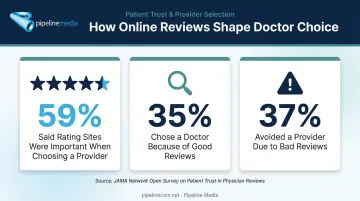
Rating sites aren't identical to Facebook or Instagram, but the pattern holds: what patients find online influences where they go for care.
Building Trust Before the First Appointment
An active, well-maintained profile does more than fill a content calendar. It signals that a practice is:
- Accessible: patients can ask questions and see real responses
- Current: health tips, service updates, and office news stay fresh
- Credible: a knowledgeable source, not just a phone number and address
That credibility has a catch, though. Pew Research found that 40% of U.S. adults get health information from social media influencers or podcasts, yet only 10% of those users trust all or most of what they see. The other 90% approach it with some skepticism.
That gap matters. The practices that succeed aren't the loudest ones. They're the ones that consistently demonstrate real clinical expertise, cite accurate information, and resist overselling. That same consistency keeps a practice top of mind long after the appointment ends.
Staying Top-of-Mind Between Visits
Most patients don't think about their dentist, dermatologist, or family doctor until they need one. Consistent posting changes that.
A practice that shows up in a patient's feed every week, with a seasonal health tip, a staff update, or a quick answer to a common question, stays remembered. That familiarity often supports:
- Speeds up rebooking for routine or follow-up care
- Encourages direct referrals through social channels
- Reduces no-shows as patients feel more connected to the practice
None of this requires viral content. It requires showing up, being useful, and doing it on a schedule patients can count on.
Navigating HIPAA Compliance and Content Rules for Healthcare Social Media
This is where most healthcare social media strategies stumble, not from bad intentions, but from not knowing exactly where the lines are.
The Core Rule: No PHI Without Written Consent
HIPAA's Privacy Rule requires a patient's written authorization before any protected health information is used for marketing. That includes:
- Names, photos, or details shared in direct messages
- Before-and-after photos posted without a signed release
- Accidental tags or mentions that reveal someone was treated at your practice
The risk is real. HHS settled with a dental practice for $10,000 after it allegedly disclosed patient names and health details while responding to Yelp reviews. The lesson: never confirm someone is a patient in a public reply, even to defend your practice.
FDA rules apply too. Practices promoting treatments, devices, or products must follow FDA guidance on promotional claims, not just HIPAA. On character-limited platforms like X or Instagram captions, any benefit claim needs the most serious risks displayed with similar visual prominence, plus a link to full risk information.
Content Frameworks That Keep Feeds Balanced
Two frameworks help healthcare accounts stay useful without feeling like an ad feed.
The 5-5-5 rule rotates five content types: educational, promotional, behind-the-scenes, community, and curated. Rotating prevents any single type, especially promotional, from dominating the feed.
The 70/20/10 rule splits content into:
- 70% educational or value-driven content
- 20% shared or curated content from trusted sources
- 10% promotional content about services
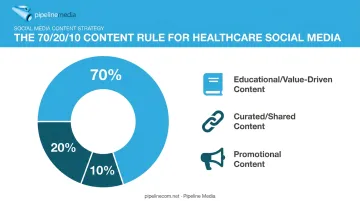
Neither is a regulatory mandate. They're practical guardrails that keep an account from feeling salesy, which matters given how skeptical patients already are of health content online.
Staff Training and Documentation
Content frameworks only work if the people posting understand the compliance rules behind them. Every practice posting on social media needs:
- A documented social media policy covering PHI handling, consent, and response protocols
- Regular staff training, especially for anyone answering DMs or comments
- Clear disclaimers for staff running personal "healthcare influencer" accounts that mention their employer
Do: Post a before-and-after photo only with a signed consent form and a "results may vary" disclaimer.
Don't: Post that same photo with a caption naming the patient, their condition, or their appointment date.
Choosing the Right Social Media Platforms for Healthcare Providers
There's no universal "best" platform for healthcare. The right choice depends on your specialty, your patients' age range, and whether your goal is education, recruitment, or community building.
Pew Research's 2025 survey of over 5,000 U.S. adults offers a useful reach snapshot:
- YouTube: 84% of U.S. adults
- Facebook: 71%
- Instagram: 50%
- TikTok: 37%
- LinkedIn: 25%
Usage shifts sharply by age, though, and that should drive platform decisions more than any trend report.
Facebook still reaches the widest multi-generational audience, especially patients 30 and older. It works well for community and event updates, plus longer educational articles worth sharing.
Instagram skews younger, with 80% adoption among 18-29 year-olds versus just 19% among those 65+. It's built for visual storytelling: infographics breaking down common conditions, short-form Reels, and behind-the-scenes glimpses of the practice.
LinkedIn works best as a professional network rather than a patient-acquisition channel. Use it for referral relationships with other providers, thought leadership articles from physicians, and recruiting clinical or administrative talent.
TikTok and YouTube
These two split by format as much as audience. TikTok favors short, quick-tip videos that resonate with viewers under 30. YouTube supports longer, in-depth patient education (think a 10-minute explainer on a procedure) and reaches a broader age range overall.
Rather than juggling five accounts, most practices see better results picking two platforms that fit their specialty and posting consistently. For teams that would rather focus on patient care than content calendars, agencies like Pipeline Media manage that day-to-day consistency across Instagram, Facebook, X, and LinkedIn without adding to staff workload.
Content Ideas and Lessons from Healthcare Influencers
Once compliance guardrails are set, the next question is: what do you actually post?
Core Content Pillars
Reliable, repeatable ideas include:
- Educational explainer videos on common procedures or conditions
- Seasonal health tips tied to flu season, allergy season, or sun safety
- Infographics simplifying complex conditions into shareable visuals
- Live Q&A sessions where a provider answers common patient questions
Testimonials Done the Right Way
Beyond these content pillars, patient testimonials add another layer of social proof, but only with the right guardrails:
- Written, signed consent from the patient before posting
- No identifying medical details in the caption or comments
- A clear focus on the patient's experience, not clinical specifics
Humanizing the Practice
Testimonials build trust before a visit, and behind-the-scenes content extends that trust into the experience itself. Staff introductions, day-in-the-life clips, and quick tours of a treatment room reduce the anxiety many patients feel before a visit. Familiar faces make appointments feel less clinical.
Healthcare Influencers Worth Studying
That same human-first approach explains why a handful of clinicians have built large followings by making medical information genuinely engaging:
- Dr. Mike (Mikhail Varshavski, DO): A family medicine physician with millions of followers across Instagram and YouTube. His content blends real medical explanations with humor, consistently correcting misinformation without talking down to his audience.
- Dr. Pimple Popper (Sandra Lee, MD): A board-certified dermatologist whose visual content built a following of millions on YouTube by making dermatology procedures accessible.
- Mama Doctor Jones (Danielle Jones, MD): An OB-GYN whose educational videos answer questions patients are often too embarrassed to ask a search engine, let alone their doctor.
Smaller practices don't need millions of followers to copy the strategy. A pediatric dentist explaining why baby teeth matter, or a family doctor answering the three questions patients ask every flu season, can build the same trust locally.
The takeaway: none of these influencers succeed by pitching services directly. They succeed by making complex health topics accessible.
Measuring Success and Scaling Your Social Media Efforts
Posting consistently is only half the job. Knowing whether it's working is the other half.
Metrics That Matter
Track these at minimum:
- Engagement rate (likes, comments, shares, saves relative to followers)
- Website referral traffic coming from social platforms
- Appointment or contact inquiries originating from social channels specifically
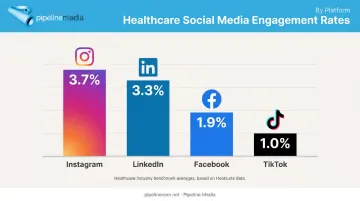
Healthcare benchmark data from Hootsuite puts average engagement rates around 3.7% on Instagram, 3.3% on LinkedIn, 1.9% on Facebook, and 1.0% on TikTok — useful reference points for judging whether content is landing. Compare these figures against your own monthly numbers to catch performance dips before they become bigger problems.
The Real Resource Gap
Researching content, staying current on compliance rules, and posting on a consistent schedule takes real time, time most clinical staff simply don't have between patients.
This is where many practices choose to outsource. Pipeline Media's Social Media Presence package ($500/month) manages Instagram, Facebook, X, and LinkedIn for practices that want a professional, consistent presence without pulling staff away from patient care.
The package covers content creation, scheduled posting, on-brand captions, and comment and inbox monitoring. Practices curious about scope can book a free consultation to talk through specifics.
Compliance still matters here: general social media management doesn't replace a practice's own compliance review. Healthcare organizations should confirm that any content involving patient information, testimonials, or treatment claims meets HIPAA and FDA requirements before it goes live, whether managed in-house or by an outside partner.
Reviewing and Adjusting
Revisit performance quarterly. If educational content consistently outperforms promotional posts, shift the 70/20/10 mix toward more of what's working. Strategy shouldn't sit still; it should move with what your specific audience responds to.
Frequently Asked Questions
What are the common social media content rules for medical social media management (such as the 5-5-5 and 70/20/10 rules)?
The 5-5-5 rule rotates five content types (educational, promotional, behind-the-scenes, community, curated) to keep feeds varied. The 70/20/10 rule allocates 70% educational, 20% curated, and 10% promotional content, keeping accounts trustworthy rather than salesy.
Which social media platform is best for healthcare social media management?
There's no single best platform. Facebook suits broad, multi-generational outreach, while Instagram fits visual, younger-skewing content. LinkedIn works for referrals and recruiting, and TikTok or YouTube fit short- or long-form education depending on patient age.
Who are the most influential doctors or healthcare influencers on social media?
Dr. Mike and Mama Doctor Jones are among the best-known examples. Both pair genuine clinical credentials with relatable, accessible explanations rather than direct service promotion.
How often should healthcare practices post on social media?
Three to five posts per week is a reasonable baseline for most practices. Adjust based on engagement data and how much staff time is realistically available for content creation and review.
Is it HIPAA-compliant to share patient testimonials on social media?
Yes, but only with the patient's explicit written consent and no protected health information disclosed in the post, caption, or comments. Skipping the signed release creates real compliance exposure.
How much does professional healthcare social media management typically cost?
Market pricing for general social media management ranges roughly from $500 to $5,000 USD per month, depending on scope. Pipeline Media's Social Media Presence package, for example, runs a flat $500 USD/month for full management of four platforms.