
That said, many schools struggle with the balance. Administrators face constant pressure to send announcements, fundraising appeals, and enrollment updates, but too many emails wear out a family's patience fast. Send too few, and important deadlines get missed.
This guide covers the rules, ideas, segmentation strategies, and platform choices schools need — plus whether email marketing still earns its place in a school's communication mix heading into 2026.
Key Takeaways
- Segmented lists for students, parents, staff, and alumni outperform generic school-wide blasts
- The 80/20 rule and the 5 C's keep school emails compliant without losing engagement
- Mobile-friendly, personalized emails earn stronger opens and clicks than mass templates
- Full-service email partners free school staff from hours of list and campaign work each month
Why Email Marketing Still Matters for Schools
Email gives schools something print flyers and social posts can't: measurable, trackable results. Every open, click, and unsubscribe tells you something about what your audience actually wants.
Nonprofit sector data offers a useful proxy here. M+R's 2026 benchmark report found nonprofits generated $2.40 in email-sourced revenue per subscriber in 2025, up from $1.87 in 2024, based on an average of 50 messages sent per subscriber annually. That's not an education-specific figure, but it shows sustained, growing returns from email as a channel.
Schools use email for more than one job. It supports:
- Prospective student outreach — inquiry-to-application nurture sequences
- Fundraising — annual campaigns, capital drives, and giving-day pushes
- Event attendance — open houses, parent-teacher conferences, athletic events
- Alumni engagement — reunion invites, career networking, giving appeals
- Day-to-day family updates — schedule changes, closures, permission forms
The Staffing Reality Behind the Numbers
Those returns only hold if someone can run the channel well. Most school communications staff already wear five hats, and building segmented lists, designing mobile-friendly templates, and monitoring deliverability takes hours registrar's offices and advancement teams rarely have.
That capacity gap is why many schools move from DIY platforms to full-service email broadcasting. Pipeline Media, which has worked with organizations across the Training & Education sector, handles the full campaign lifecycle: clients send their list and message, and the team manages setup, testing, personalization, delivery, and unsubscribe compliance.
Most jobs go live within 60 to 90 minutes of submission—no weekly login to rebuild segments or chase bounces.

Email Marketing Rules and Best Practices for Schools
Good school email programs follow a few repeatable frameworks. Here's what matters most.
The 80/20 Rule
Roughly 80% of your content should deliver value: school news, helpful resources, event recaps. The remaining 20% can be promotional, such as fundraising asks or enrollment pitches. Families who feel like every email is a pitch will unsubscribe fast. Families who get consistent value will stick around for the ask when it comes.
Cadence: Test, Don't Assume
There's no universal "three-email rule" backed by hard data. Nonprofit benchmarks show organizations sending an average of 50 messages per subscriber annually, including 31 fundraising messages, far more than most schools would consider sending. Practical approach:
- Start with a 3-message sequence for admissions or event promotion
- Compare engagement and unsubscribe rates against 2- and 4-message variants
- Let your own data, not a generic rule, set your cadence
The 5 C's Framework
Apply these to every school email:
- Clear: one primary message, no competing calls-to-action
- Concise: respect busy parents' attention spans
- Compelling: give a real reason to open and act
- Consistent: same sender name, same visual style every time
- Compliant: meets CAN-SPAM and FERPA requirements (more below)

Compliance: CAN-SPAM and FERPA
CAN-SPAM doesn't require prior opt-in for marketing emails, but it does require truthful subject lines, a valid physical address, and a working opt-out link honored within 10 business days. Outsourcing your email delivery doesn't remove this responsibility from the school. FERPA is separate and stricter for student records. The Department of Education's guidance requires signed, dated consent before disclosing personally identifiable information from education records, unless an exception applies. Minimize student data in marketing emails and restrict access to family/student contact lists to authorized staff only.
Mobile Optimization
Most parents check email on their phones between school drop-off and their commute. Build templates with:
- Responsive design that adapts to screen size
- Short preheaders and one clear tap target
- Alt text on images and readable font sizes
- A plain-text fallback for accessibility
Timing and Testing
GetResponse's 2024 benchmark report found Tuesday produces the strongest average open and click rates. Stronger send windows tend to fall around 4-6 AM and 5-7 PM, though weekday differences are generally small. Test send times against your own audience's time zone rather than copying a generic schedule, and A/B test subject lines regularly.

Effective Email Marketing Ideas and How to Email Teachers/Staff
Core Email Types Every School Should Use
- Newsletters — weekly or monthly digest of school news
- Event invitations and reminders — open houses, conferences, fundraisers
- Fundraising appeals — annual fund, giving days, capital campaigns
- Enrollment/admissions nurture series — inquiry through decision
- Alumni updates — reunions, career features, giving requests
- Emergency alerts — closures, schedule changes, safety notices
Emailing Teachers and Staff Differently
Staff inboxes already fill up with instructional messages, so internal email has to earn attention fast:
- Keep subject lines task-oriented ("Action needed: submit grades by Friday")
- Send during non-instructional hours, not mid-class-period
- Keep staff lists completely separate from parent/student lists
Building Welcome and Deadline Series
New families respond best to a short welcome series:
- One intro email that sets expectations
- One resource-heavy follow-up with handbooks, portals, and calendars
- One "who to contact" email for common questions
Admissions and tuition deadlines need their own reminder sequence. Space messages as the date approaches instead of sending every notice in one burst.
Subject Lines That Actually Get Opened
Compare these two:
- Weak: "School Newsletter — March"
- Strong: "3 days left: Reserve your spot for Spring Open House"
Lead with a deadline, a number, or the reader’s role whenever you can. Personalization and urgency beat generic labels almost every time.
Measuring What Matters
Track three core metrics:
- Open rate — did the subject line work?
- Click-through rate — did the content drive action?
- Conversion rate — did the click turn into an RSVP, donation, or application?
Use each send’s results to refine the next one. Full-service email broadcasting—such as Pipeline Media’s managed campaigns—typically includes tracking on opens, undeliverable messages, and link clicks in standard delivery reports, so your team can adjust without building a separate analytics stack.
Segmenting Your School Email List
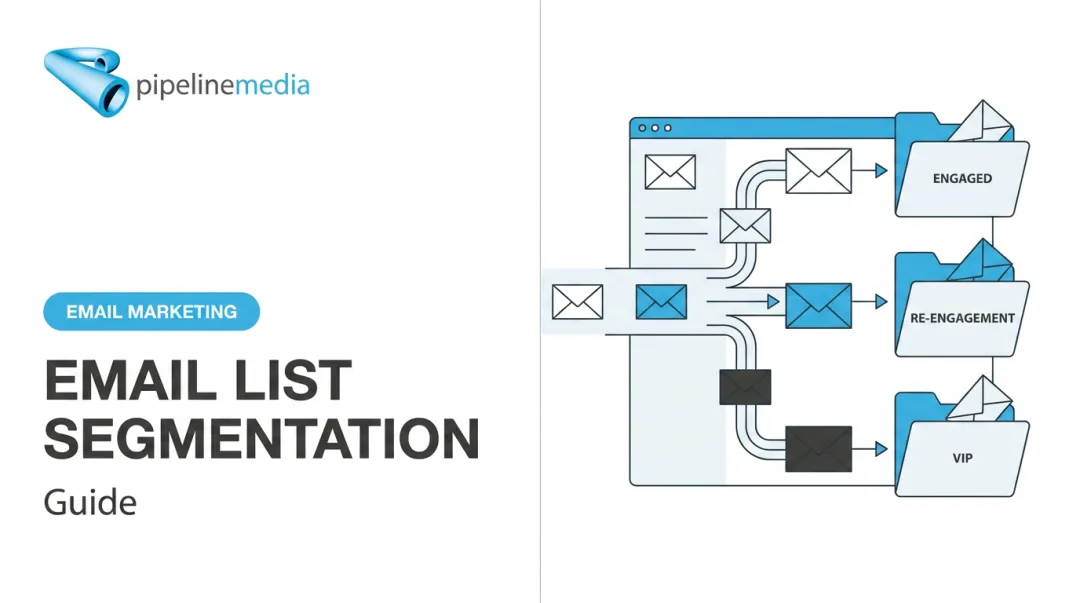
A single list sent to everyone guarantees irrelevant content for someone. Segmentation fixes that and protects your sender reputation from unsubscribe spikes.
Common school segments:
- Students (by grade level)
- Parents (by enrollment stage: prospective, current, graduating)
- Teachers and staff (by department)
- Alumni (by graduation year or donor history)
- Wider community (donors, board members, local partners)
Those audience cuts only pay off when the message matches the segment. Mailchimp's segmentation study found segmented campaigns produced 14.31% higher open rates and 100.95% higher click rates than non-segmented sends across nearly 9 million recipients. The study is older, so confirm the lift with your own campaigns. The pattern still holds: relevance wins.

Filter criteria that improve relevance:
- Grade level or program
- Enrollment stage (inquiry, applied, enrolled)
- Academic interest or extracurricular involvement
- Giving level and last gift date
Avoid using sensitive education-record data for promotional targeting unless you have a clear FERPA basis and documented consent.
Choosing an Email Platform for Schools
Schools typically choose between three platform categories.
| Platform Type | Examples | Best For |
|---|---|---|
| School-specific suites | Finalsite, SchoolAdmin | K-12 institutions needing enrollment + communications together |
| General email tools | Mailchimp, SendGrid, Constant Contact | Newsletter or alumni lists without sensitive data |
| Full-service broadcasting | Pipeline Media | Schools without dedicated marketing staff |
| The real tradeoff is staff time, not feature lists. DIY platforms need someone on staff to build templates, manage lists, and troubleshoot deliverability with every send. | ||
| A full-service provider like Pipeline Media's email broadcasting handles list setup, personalization, testing, compliance, and unsubscribe management for the school. Most campaigns go live within 60 to 90 minutes of submission. | ||
| When evaluating any platform, check for: |
- Segmentation capability by role, grade, or enrollment stage
- Mobile-friendly template options
- Built-in compliance and opt-out tools
- Reporting on opens, clicks, and undeliverable messages Whichever route you choose, verify how contact data is stored and accessed before uploading any parent or student information — this matters more with FERPA-covered data than with general marketing lists.
Frequently Asked Questions
What are the key email marketing rules and best practices for schools?
The 80/20 rule keeps content mostly valuable rather than promotional. The 5 Cs (clear, concise, compelling, consistent, compliant) guide message quality. Cadence should be tested against your own audience rather than following a fixed rule.
What are effective email marketing ideas for schools, and how should I email teachers?
Use newsletters, event reminders, admissions nurture series, and alumni updates as core content types. For teachers, keep subject lines task-focused, send outside instructional hours, and keep their list separate from parent communications.
Is email marketing to schools still worth it in 2026?
Yes. Nonprofit benchmark data shows continued revenue growth from email year over year, and it remains more measurable and cost-transparent than print. It complements, rather than competes with, social media.
What email platforms do schools use for email marketing?
Schools typically choose between school-specific suites like Finalsite, general tools like Mailchimp or SendGrid, and full-service broadcasting providers like Pipeline Media for schools without dedicated marketing staff.
How often should schools send marketing emails to parents and students?
There's no universal rule: test a 3-message sequence against 2- and 4-message variants and measure unsubscribes. Cadence should vary by segment and purpose, not follow one fixed number.
How can schools measure the success of their email campaigns?
Track open rate to gauge subject line performance, click-through rate to measure content engagement, and conversion rate to see if clicks turned into RSVPs, donations, or applications.