Email is the one channel that stays present through all of that quiet research. No app to open, no feed to scroll past.
B2B email lead generation isn't the same game as a B2C blast. It's the deliberate use of targeted campaigns to identify, attract, and convert business prospects into qualified opportunities. It's built on permission, segmentation, and patience, not volume.
This guide covers list-building, nurture sequences, deliverability and compliance, and how to decide between managing it yourself or handing it to a full-service partner.
Key Takeaways
- Email delivers strong B2B ROI when lists are permission-based and content matches buyer pain points
- List quality, personalized nurturing, and deliverability compliance have to work together, not in isolation
- Long B2B sales cycles (11+ months, 11-person buying committees) favor nurturing over one-off blasts
- Businesses without in-house marketing staff can match these results by partnering with a full-service provider like Pipeline Media
Building a High-Quality B2B Email List
Quantity feels productive. It isn't. A list of 2,000 engaged, opted-in contacts will outperform 20,000 cold names every time. Purchased lists bring higher bounce rates and spam complaints, and most B2B email platforms explicitly prohibit them (Mailchimp).
Lead Magnets That Actually Convert
Generic ebooks don't move the needle anymore. What works:
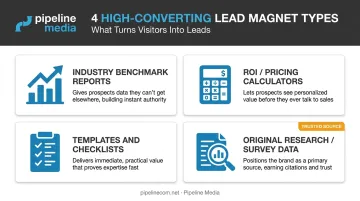
- Industry benchmark reports — data your prospects can't easily find elsewhere
- ROI or pricing calculators — tools that help them build an internal business case
- Templates and checklists — practical, immediately usable resources
- Original research or survey data — positions you as a source, not just a vendor
On forms: HubSpot's analysis of more than 40,000 landing pages found conversion drops only slightly as fields increase, but multiple text areas and dropdowns hurt completion far more than simple single-line fields (HubSpot). The lesson isn't "stick to 5 fields" — it's cut the friction that actually costs you completions.
Multi-Channel List Growth Tactics
Building a healthy list means fishing in more than one pond:
- Gated content on landing pages tied to specific buyer questions
- LinkedIn, organic and paid, still the strongest B2B social channel for reaching decision-makers
- Webinars, which double as content and a natural registration-to-list pipeline
- Trade show QR codes, capturing interest at the exact moment of engagement
- Partner co-marketing, sharing audiences with complementary (non-competing) vendors
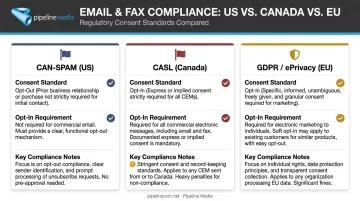
A bigger list from more channels also means bigger compliance exposure. If you're marketing into finance, healthcare, or government, treat consent seriously — requirements differ by jurisdiction:
| Regulation | Consent standard |
|---|---|
| CAN-SPAM (US) | No prior opt-in required, but honest headers and opt-outs are mandatory |
| CASL (Canada) | Express or implied consent generally required; no pre-checked boxes |
| GDPR/ePrivacy (EU) | Prior consent generally required, with limited "soft opt-in" exceptions |
Double opt-in isn't legally mandated everywhere, but it's strong practical proof of consent. It also protects your sender reputation, which matters most with regulated audiences who scrutinize every touchpoint. Agencies managing bulk email delivery, including Pipeline Media, build unsubscribe handling and consent tracking into every campaign for exactly this reason.
Once someone signs up, segment immediately by role, industry, and buying stage. A CFO and an IT director shouldn't get the same welcome email. And clean your list regularly — pruning bounces and inactive contacts protects your sender reputation before your next campaign even launches.
Crafting Lead-Generating Emails and Nurture Sequences
Decision-makers skim. One clear insight or action per email works better than cramming three offers into one send, which is why the nurture sequence below builds around a single focused message per touchpoint.
Structuring the Buyer Journey Nurture Sequence
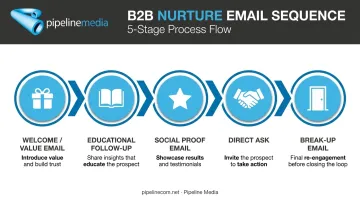
A reliable five-email framework:
- Welcome/value email — deliver on what they signed up for immediately
- Educational follow-up — a relevant case study or insight tied to their industry
- Social proof email — testimonials, results, or third-party validation
- Direct ask — invite them to a meeting or demo, no ambiguity
- Break-up email — a final, low-pressure re-engagement attempt for silent leads
Trigger these based on behavior — downloads, page visits, email opens — rather than a fixed calendar. A prospect who just viewed your pricing page needs a different next email than one who hasn't opened anything in three weeks.
Personalization Beyond First Names
Merge tags aren't personalization. Real personalization references:
- The prospect's specific role and what they're accountable for
- Industry-specific challenges they're likely facing
- Prior engagement — what they downloaded, clicked, or attended
Segmented email campaigns generate 30% more opens and 50% more clickthroughs than unsegmented sends (HubSpot). Meanwhile, 58% of B2B buyers said they accepted outreach specifically because it was highly customized to their situation (DemandGen Report, 2024). Context beats a first-name merge every time.
Structurally, every email needs:
- A subject line that earns the open
- A short pre-header that adds context, not repetition
- One clear CTA tied to a single hook
- Clean, mobile-responsive design with consistent branding
Test one variable at a time — subject line, CTA, or send time — and give it enough volume to reach statistical significance before drawing conclusions. Managing this level of tracking and compliance (unsubscribe handling, deliverability, segmentation) across a full nurture sequence is exactly the kind of execution work agencies like Pipeline Media handle for clients running high-volume email broadcasts.
Deliverability and Compliance Essentials
None of this matters if your emails land in spam. Inbox placement varies significantly by industry and provider — Validity's 2025 benchmark data shows software companies landing around 80.9%, finance at 87.3%, and government senders reaching 96.3% (Validity, 2025). Placement, not just acceptance by the receiving server, is what you should be measuring.
Technical Foundations
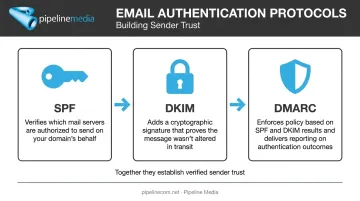
Three protocols form the backbone of sender trust:
- SPF — authorizes which servers can send on your domain's behalf
- DKIM — adds a cryptographic signature verifying the message wasn't altered
- DMARC — enforces policy and reports back on authentication failures
Gmail now requires SPF or DKIM for every sender, and SPF, DKIM, and DMARC together for anyone sending more than 5,000 messages a day to personal Gmail accounts (Gmail sender guidelines, 2024). If you're launching from a new domain, warm it up gradually — start with your most engaged contacts and scale volume over a few weeks rather than blasting your full list on day one.
Compliance Requirements Marketers Can't Skip
Every commercial email needs:
- A visible, functioning unsubscribe link
- Accurate sender information — no disguised "From" addresses
- A physical business address in the footer
- Opt-outs honored promptly — CAN-SPAM gives you 10 business days to process a request; CASL sets the same 10-day window but also requires opt-in consent before you email Canadian recipients in the first place
The FTC has been explicit that outsourcing your email program doesn't transfer legal accountability for CAN-SPAM compliance (FTC). You can hand off the work; you can't hand off the responsibility.
That responsibility doesn't end at setup — list hygiene and bounce/complaint monitoring require ongoing attention every month. Pipeline Media's managed email broadcasting service handles this operational load directly, including unsubscribe processing and compliance tracking, so your team isn't chasing bounce reports between campaigns.
DIY Tools vs. Full-Service Email Lead Generation Management
Running email lead gen yourself means owning every piece: selecting and paying for an ESP, building templates, monitoring authentication, tracking bounce rates, and staying current on CASL, CAN-SPAM, and GDPR obligations. That's manageable with a dedicated marketing team. It's a real burden without one, and the hours add up fast.
For SMBs juggling marketing alongside a dozen other responsibilities, the monthly hours spent on list management, template design, and compliance tracking often add up to more than the cost of outsourcing.
Pipeline Media, a Toronto-based full-service communications agency operating since 2003, is one example of how this works in practice. Clients send their email list, message content, and any logos or graphics — Pipeline handles the rest:
- Converting Word or PDF content into properly formatted HTML
- Testing and retesting each job before it goes live
- Applying personalization/merge fields across the full list
- Managing the unsubscribe system and working within current email regulations
- Delivering the campaign — with capacity for millions of emails per hour
- Providing detailed tracking reports on opens, clicks, and undeliverable addresses
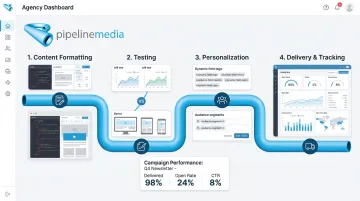
Most campaigns go live within 60-90 minutes of submission. For a business without a marketing department, that's the difference between a campaign that sits half-finished for two weeks and one that's reaching inboxes by lunchtime.
Measuring and Optimizing Campaign Performance
You can't improve what you don't track. Core B2B email KPIs, with general benchmark ranges:
| Metric | Benchmark | Notes |
|---|---|---|
| Open rate | ~39% (B2B services) | Distorted by privacy tools and bots (HubSpot) |
| Click-through rate | ~2.2% | Varies heavily by offer relevance |
| Conversion rate | ~2.4% | Definition varies by funnel stage |
| Unsubscribe rate | Under 0.15% | Watch for spikes after specific sends |
| Bounce rate | No universal figure | Track your own trend line over time |
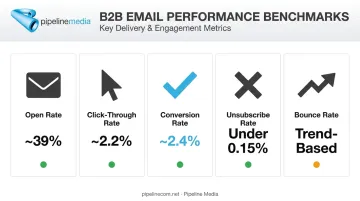
These benchmarks are a starting point, not the finish line — vanity metrics like opens and clicks only tell half the story. RevOps-minded teams go further, tracking lead-to-opportunity conversion and pipeline contribution by campaign. An email with a mediocre open rate that generates three qualified opportunities beats one with a great open rate and zero pipeline impact.
Build a test-and-adjust cadence, monthly or quarterly, since subject lines that worked in Q1 often fatigue by Q3 as buyer expectations shift. This makes measurement an ongoing process rather than a one-time setup task. Full-service email broadcasting providers like Pipeline Media build detailed tracking reports on opens, clicks, and delivery status directly into managed campaigns, giving teams the data needed to adjust without building reporting infrastructure from scratch.
Frequently Asked Questions
What is the difference between B2B email marketing and B2B email lead generation?
Email marketing nurtures existing subscribers and customers with ongoing content. Lead generation specifically targets converting new prospects into qualified leads through gated offers and targeted outreach.
How often should I send B2B lead generation emails?
Most B2B programs send 1-2 nurture emails per week, balancing staying top-of-mind with avoiding fatigue. Adjust based on engagement data and your specific sales cycle length rather than following a fixed rule.
What is a good conversion rate for B2B email lead generation?
Benchmarks generally fall between 2-5%, with recent data pointing closer to 2.4% for B2B email specifically. Your actual rate depends heavily on industry, offer type, and how you define conversion.
Should I buy an email list or build one organically?
Purchased lists damage deliverability, violate opt-in regulations in most jurisdictions, and generate higher spam complaints. Organically built lists convert better and protect your sender reputation long-term.
How do I stop my B2B emails from landing in spam?
Set up SPF, DKIM, and DMARC authentication, warm up new sending domains gradually, and maintain clean lists by removing bounces and inactive contacts. Avoid spam-trigger language and monitor your inbox placement rate directly.
Is it better to manage email lead generation in-house or outsource it?
In-house gives you full control but demands consistent time for list management, compliance, and technical upkeep. Outsourcing to a full-service provider like Pipeline Media suits businesses without dedicated marketing staff who need campaigns running without the operational burden.