
Among golfers ages 18-34, 83% said influencer content on social media made them feel more knowledgeable about a course and more likely to visit it, according to a Lightspeed golf industry report. That's a massive chunk of your future member base forming opinions before you even know they exist.
The problem? Most course managers are already buried in tee sheets, staffing, and turf conditions. Social media becomes an afterthought — posted sporadically, then abandoned for weeks.
This guide breaks down how to build a real strategy, what content actually drives bookings, how to manage your online reputation, and when it makes sense to hand the work to someone else.
Key Takeaways
- Golfers check social media before booking, making an active presence essential
- A strategy needs clear goals, a defined audience, and 2-3 focused platforms
- Short-form video and user-generated content outperform polished, produced clips
- Responding to reviews affects whether golfers choose your course over a competitor
- Outsourcing to a managed service can restore hours of staff time each month
Why Social Media Is a Game-Changer for Golf Course Marketing
Why Social Media Matters for Golf Course Marketing
Word-of-mouth still matters in golf, but the discovery journey now happens on a screen, long before a golfer mentions your course to a buddy.
Public course managers already feel this shift. A member posts a birdie on the 7th hole, tags your course, and suddenly 200 of their followers see your fairways. That's free advertising you didn't have to script.
The upside of showing up consistently:
- More tee-time bookings from people who saw your course before searching for it
- Stronger ties with existing members through shared moments and shoutouts
- Better visibility when golfers compare your course against three others in town
The cost of staying quiet: Competitors with active accounts capture the attention your course could have earned. Worse, an unanswered negative review or ignored comment sits there publicly, telling every future visitor that nobody's paying attention.
A dormant profile isn't neutral; it's a liability sitting in plain sight.
Building a Winning Golf Course Social Media Strategy
Posting without a plan is how most courses end up with an inconsistent feed and no measurable results. A real strategy starts with three decisions.
Define Your Goals and KPIs
Not every course should chase the same outcome. A private club focused on member retention has different needs than a daily-fee course fighting for weekend tee times.
Common goals include:
- Driving tee-time bookings: tracked through link clicks, promo code redemptions, or booking page visits
- Growing membership sign-ups: tracked through inquiry form submissions or DMs
- Building brand awareness: tracked through reach, impressions, and follower growth
Pick one primary goal per quarter. Trying to optimize for all three at once dilutes your content and makes results hard to measure.
Know Your Audience
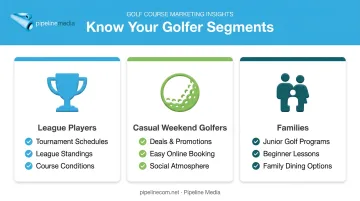
Your followers aren't one homogenous group of "golfers." Segment them:
- League players care most about tournament schedules, standings, and course conditions
- Casual weekend golfers respond to deals, easy booking, and a social vibe
- Families look for junior programs, lesson packages, and clubhouse dining options
Tailor captions and content to whichever segment you're targeting in that post. A tournament recap speaks to league players; a "bring the kids" post speaks to families.
Choose the Right Platforms
Spreading effort across five platforms usually means doing all of them poorly. Pick two or three based on where your audience actually spends time.
Pew Research's 2025 fact sheet shows how usage splits by age:
| Platform | Ages 18-29 | Ages 30-49 | Ages 50-64 | Ages 65+ |
|---|---|---|---|---|
| YouTube | 93% | 89% | 80% | 62% |
| 70% | 80% | 76% | 62% | |
| 80% | 58% | 35% | 19% | |
| TikTok | 62% | 49% | 24% | 5% |
For most golf courses, that means:
- Facebook for reaching core members and the 30-65+ demographic that still books most rounds
- Instagram for showcasing the course visually to a slightly younger, engaged crowd
- TikTok or YouTube Shorts if you're actively courting the under-35 golfer
Facebook and Instagram remain the strongest starting point for the majority of courses. Add a third platform only once the first two are running smoothly.
Content Ideas That Drive Engagement and Bookings
Once your strategy is set, content is where golfers actually decide to visit. Variety keeps the feed interesting instead of feeling like a repetitive ad.
Showcase Your Course
Golfers plan visits around what they see. Give them a reason to picture themselves there:
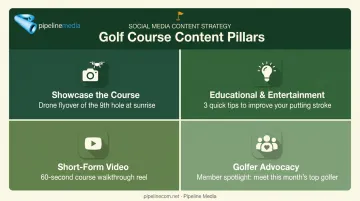
- Drone flyovers of signature holes
- Real-time course condition updates (green speed, rough length, recent maintenance)
- Sunrise or sunset shots that sell the experience, not just the layout
Mix Educational and Entertainment Content
A feed that's all promotions gets ignored. Balance it with:
- Quick pro tips from your head pro
- Gear reviews tied to your pro shop inventory
- Behind-the-scenes clubhouse or grounds crew moments
- Trending golf topics given a local spin (a Masters recap, but framed around your own course)
Short-Form Video Wins Attention
Short-form video has become the default format for content discovery. In HubSpot's survey of over 700 consumers, 37% preferred discovering products through short-form video like TikTok or Reels. 63% said they preferred relatable, authentic videos over polished, high-production content, according to HubSpot's 2024 video consumption research.
Translation: that shaky phone clip of a member sinking a long putt often beats a scripted commercial. Don't over-invest in production before you've tested what actually resonates.
Turn Golfers and Members Into Advocates
Your best marketing often comes from people who already play your course.
- Ask golfers to tag your course in their round photos, then reshare
- Spotlight long-time member stories or milestone rounds (100th round, hole-in-one)
- Run periodic giveaways — a free round or pro shop credit — requiring likes, comments, or shares to enter
These tactics cost little and extend your reach through networks you'd never reach organically.
Consistency, Contests, and Paid Promotion
A brilliant post published once a month does less than a mediocre post published three times a week. Consistency beats sporadic bursts of effort every time.
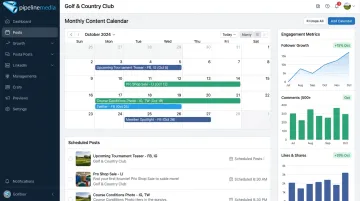
Build a simple content calendar that maps posts to:
- Your regular posting cadence (aim for 3-5 times weekly)
- Upcoming tournaments, leagues, or seasonal events
- Contest and giveaway launch dates, such as a "tag your foursome" photo giveaway or a closest-to-pin caption contest
Once organic content is performing — meaning you know which formats get shares and comments — paid promotion can extend that reach. Video content sees stronger engagement and share rates than static image posts across most platforms, making it a reasonable first choice when testing ad budget.
One rule matters most here: don't put ad dollars behind content you haven't tested organically first. If a post flops without paid boost, paying to push it further rarely fixes the underlying problem.
Engaging Followers and Managing Your Online Reputation
Posting content is half the job. Responding to what comes back is the other half, and it's the half most courses neglect.
Respond quickly to comments, questions, and DMs. A golfer asking about weekend availability in your comments section wants an answer, not silence. Slow responses push them to call a competitor instead.
That same responsiveness applies to reviews golfers leave elsewhere online, on platforms like Google, GolfPass, and Trustpilot, and how you respond there shapes your reputation:
- Reply to every review you receive, positive or negative. 88% of consumers are likely to use a business that responds to all reviews, while only 47% say the same about businesses that never respond, according to BrightLocal's 2024 Local Consumer Review Survey.
- Give negative reviews extra attention: a thoughtful reply to a one-star review about slow pace of play can do more for your reputation than ten five-star reviews sitting unanswered.
- Watch for mentions that don't tag your account: golfers often mention courses in group chats or on local golf pages without tagging directly.
Practice social listening to catch these untagged mentions. Search your course name periodically and respond where it makes sense.
Measuring Success and Knowing When to Call in the Pros
None of this works without tracking whether it's actually driving results.
Core metrics worth watching:
- Engagement rate (likes, comments, shares relative to followers)
- Follower growth month over month
- Click-through rate on booking links
- Booking conversions tied specifically to social campaigns
Review platform analytics regularly, not just monthly. Weekly checks reveal which content formats are working while there's still time to adjust the calendar.
Here's the honest reality: most golf course operators don't have the bandwidth to run a content calendar, manage paid ads, and monitor reputation across four platforms while also running daily operations. Something usually slips.
This is where a managed service like Pipeline Media's Social Media Presence package can help. For $500/month USD, it covers full management of Instagram, Facebook, X, and LinkedIn: custom content creation, on-brand captions, scheduled posting, comment and inbox monitoring, and profile optimization.
Built for courses that want consistent, professional visibility without adding another task to anyone's plate, it frees up real time each week for running the course rather than managing hashtags.
Frequently Asked Questions
What is a good social media strategy for a golf club?
A good strategy starts with clear, measurable goals tied to your course type, a defined understanding of your audience segments, and focus on 2-3 platforms. Consistent, varied content matters more than occasional viral posts.
How to market a golf course?
Effective golf course marketing combines a functional website, an active social presence, email or SMS retention campaigns, and consistent online reputation management. Social media typically drives the most new-visitor discovery among these channels.
How often should a golf course post on social media?
Aim for 3-5 posts weekly on your primary platforms rather than sporadic bursts of ten posts followed by silence. Consistency builds algorithm favor and keeps your course visible in followers' feeds.
Which social media platform is best for golf courses?
Instagram and Facebook are typically the strongest starting points, combining strong visual course showcasing with broader demographic reach. TikTok and YouTube Shorts are worth adding if you're targeting golfers under 35.
How much should a golf course budget for social media marketing?
Budgets vary based on whether you handle content in-house or outsource it. Factor in content creation time, occasional paid promotion, and professional management fees, with full-service packages often starting around $500/month.
Can outsourcing social media management help small golf courses?
Yes. Outsourcing frees up staff time otherwise spent on content creation and monitoring, and it ensures posting stays consistent even during busy operational seasons. This is especially valuable for courses without dedicated marketing staff.