Introduction
A potential client just Googled your law firm, accounting practice, or healthcare consultancy. Before they ever pick up the phone, they're scrolling through your LinkedIn page, checking your Facebook reviews, and forming an opinion about whether you're worth trusting with their business.
Here's the problem: many professional services firms assume social media is "not for them." Lawyers, accountants, financial advisors, and consultants often say they don't have the time or expertise to manage it consistently. That hesitation is costing them credibility they don't even know they're losing.
This guide breaks down why social media matters for professional services, which platforms actually deserve your attention, and how to build a strategy using the 40-40-20 content rule. It also covers how firms in regulated industries can get expert help managing it all without adding to their workload.
Key Takeaways
- Social media builds credibility and thought leadership beyond basic brand awareness for professional services firms.
- LinkedIn, Facebook, and X top the platform priority list for networking, research, and lead generation.
- The 40-40-20 rule splits your monthly calendar between audience value, brand building, and promotions.
- Regulated industries need a documented compliance review workflow before publishing anything.
- Outsourcing social media management frees billable professionals from hours of non-billable work each month.
Why Social Media Marketing Matters for Professional Services Firms
Professional services run on trust. Clients hire lawyers, accountants, and consultants based on relationships and reputation, not impulse purchases. Social media simply extends that word-of-mouth credibility online, letting prospects see your expertise before they ever pick up the phone.
Beyond first impressions, social channels support five strategic functions for these firms:
- Networking with referral sources, peers, and industry contacts
- Promoting thought leadership content that positions your team as experts
- Supporting SEO and website traffic through consistent link-sharing and engagement
- Researching competitors and prospects before meetings or proposals
- Recruiting talent by showcasing firm culture to potential hires
The Growth Connection
Hinge Marketing's 2026 High Growth Study surveyed 495 professional services firms representing nearly $85 billion in revenue. Thought leadership through social channels ranked among the top three high-impact marketing activities for High Growth firms.
Those same firms invested 12% of revenue into marketing overall, compared to just 5% for No Growth firms.
That gap matters. It doesn't prove social media alone drives growth, but it confirms that firms treating marketing (including social) as a real investment consistently outperform firms that treat it as an afterthought.
There's also a practical budget angle here. Traditional networking, conference travel, and client dinners cost real money. Social media mostly costs staff time. A single LinkedIn article can reach hundreds of prospects and referral sources at once. Every share from a connection multiplies that reach further, at zero additional cost.
Where Your Clients Are: Best Social Media Platforms for Professional Services
Rather than asking which platform is trending, ask where your target audience actually spends time. Professional services buyers, executives, and referral sources cluster on specific networks, and your effort should follow them there.
LinkedIn is the default starting point for B2B professional services, and the data backs that up. In the Content Marketing Institute's 2025 B2B benchmark survey of 980 B2B marketers, 85% said LinkedIn delivered the best value among organic social platforms.
Other platforms trailed far behind:
- Facebook: 28%
- YouTube: 22%
- Instagram: 21%
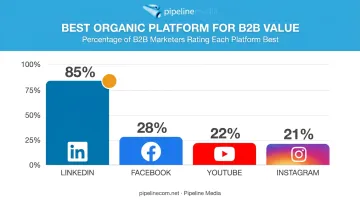
For this audience, LinkedIn stands well ahead of every alternative.
Beyond posting updates, join and actively contribute to industry-specific LinkedIn groups relevant to your specialty, such as legal practice groups, accounting associations, or healthcare compliance communities. Showing up in those conversations does more for credibility than a polished feed ever will.
Facebook still commands massive reach. Pew Research's 2025 survey of 5,022 U.S. adults found 71% of U.S. adults use Facebook, with usage climbing to 80% among adults aged 30 to 49.
For firms with a physical office, this matters for local visibility, client reviews, and search discoverability. Optimized Page Recommendations can make your business easier to find directly in Facebook search.
X (Twitter)
X plays a narrower but valuable role: journalist and influencer engagement, PR opportunities, and real-time industry conversation. Pew's 2022 survey of nearly 12,000 U.S. journalists found 69% identified Twitter as one of their two most-used platforms for work.
If your firm regularly comments on industry trends or seeks press coverage, X remains a useful channel for that visibility, even as usage patterns have shifted since the rebrand.
Instagram & YouTube
Even non-visual businesses like consultancies or accounting firms can use Instagram and YouTube to humanize their brand. Think team culture shots, event coverage, or short explainer videos.
Video is only getting bigger: Nielsen reports streaming surpassed traditional broadcast and cable combined for the first time in May 2025, with YouTube alone representing 12.5% of all U.S. television viewing that month.
Building a Strategy That Converts: Content Mix & the 40-40-20 Rule
Building a Strategy That Converts: Content Mix & the 40-40-20 Rule
Ad hoc posting doesn't produce results, but a documented strategy does, one that ties every post back to a business outcome. That strategy needs to define your business purpose, target audience, platforms, tactics, and measurable goals before you publish a single post.
Step 1: Define Your Business Goals and Audience
Most professional services firms use social media to pursue one or more of these goals:
- Generating qualified leads
- Recruiting talent
- Building brand reputation and trust
- Improving overall online visibility and website traffic
Identify every decision-influencer in your sales cycle, not just the primary buyer. B2B purchases, especially for legal, financial, or consulting services, often involve multiple stakeholders who each need convincing.
Step 2: Apply the 40-40-20 Content Rule
The 40-40-20 rule is a simple content allocation framework:
- 40% audience-focused content addressing prospect pain points (educational articles, FAQs, industry explainers)
- 40% brand-building content (firm culture, team expertise, case studies)
- 20% promotional content (service announcements, offers, direct calls to action)
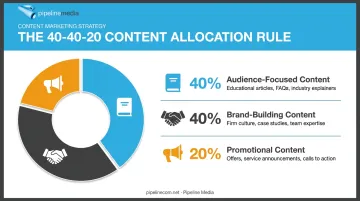
Here's how an accounting firm might apply this across a month:
| Content Type | Example | % of Calendar |
|---|---|---|
| Audience-focused | "5 tax deductions small businesses miss" | 40% |
| Brand-building | Staff spotlight, client success story | 40% |
| Promotional | "Book your Q1 tax planning session" | 20% |
Step 3: Track the Right Metrics
Not all metrics tell the same story, so separate them into three categories before drawing conclusions:
- Activity metrics — posts published, frequency
- Reach metrics — followers, likes, engagement rate
- Outcome metrics — leads generated, website traffic, new business closed
Use Google Analytics alongside platform-native dashboards to connect what you post to what it actually produces. Activity without outcomes is just noise, no matter how consistent the posting schedule looks.
Content Ideas & Compliance Considerations for Regulated Industries
Strong professional services content tends to fall into a few reliable formats:
- Educational thought-leadership articles
- Client success stories and case studies
- Employee spotlights
- Industry trend commentary
The guiding principle: educate, don't hard-sell. Mixing original content with curated third-party industry news builds trust without making your feed feel like an ad.
Regulated industries need an extra layer of oversight before hitting publish. Firms in Financial Services face specific scrutiny: FINRA requires firms to supervise and retain business-related social content shared by associated persons, and even liking a favorable third-party comment can count as adopting it under communications rules.
Healthcare organizations carry similar exposure. The HHS Office for Civil Rights fined a health center $30,000 in 2023 after it disclosed patient information while responding to a negative online review.
The lesson for regulated firms: build a documented content approval workflow before you publish anything, not after something goes wrong.
DIY vs. Outsourcing: Why Many Firms Partner with a Social Media Management Agency
Billable professionals bill by the hour. Every hour a lawyer, accountant, or consultant spends writing captions or scheduling posts is an hour not spent on client work, and it shows up directly on the bottom line. That's the core tradeoff between DIY social media and outsourcing it.
Many firms land on a hybrid model: outsourcing content creation, scheduling, and reporting, while keeping subject-matter experts involved enough to preserve authenticity. This approach balances professional consistency with the firm's authentic voice.
This is where Pipeline Media fits in. Since 2003, the Toronto-based agency has managed business communications for firms across Financial Services, Healthcare, Government, and Technology, and its social media service is built around that same full-service philosophy. The agency's Social Media Presence package ($500/month) covers:
- Custom content creation across Instagram, Facebook, X, and LinkedIn
- Scheduled posting and profile optimization to keep every channel active
- Comment and inbox monitoring so client and prospect messages don't go unanswered
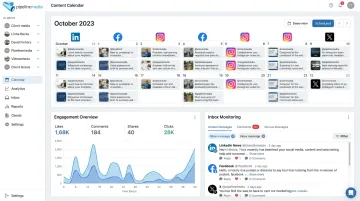
Pipeline also backs every engagement with a real-person response within minutes, not an automated ticket queue, when clients need to adjust or discuss a campaign. Firms can start with a free consultation to see if the service fits their needs.
Frequently Asked Questions
What social media do professionals use?
LinkedIn remains the top platform for professional networking and B2B lead generation. Facebook follows for broad reach and local visibility, while X serves industry conversation, journalist engagement, and PR opportunities.
What is the 40-40-20 rule for social media?
It's a content-balance guideline: 40% educational or audience-focused content, 40% brand and relationship-building content, and 20% direct promotional or sales content.
How much should a professional services firm budget for social media marketing?
Costs vary by scope. Done-for-you packages, like Pipeline Media's Social Media Presence tier, commonly start around $500/month. More comprehensive lead-generation programs from other providers can run $1,500+/month, depending on scope and platform mix.
How often should professional services firms post on social media?
A few times per week per platform is a reasonable baseline. Consistency matters far more than frequency. A steady, sustainable cadence beats sporadic bursts of activity.
Can outsourcing social media hurt the authenticity of a professional services brand?
Not if it's done right. Hybrid approaches, where an agency handles production and scheduling while in-house experts provide input, preserve authenticity while saving significant time.
Which industries benefit most from social media marketing among professional services?
Virtually all of them, including legal, accounting, consulting, healthcare, and financial advisory firms. Regulated industries need extra attention to compliance within their content strategy.