Building one from scratch, though, feels painfully slow. Watching a subscriber count creep up one signup at a time makes buying a list of 10,000 addresses look tempting.
Don't do it. This guide covers what an email list actually is, proven organic strategies to grow one, and how to keep it healthy and compliant for the long haul.
Key Takeaways
- Email marketing delivers strong ROI: 65% of marketers report $10+ back per $1 spent (Litmus, 2025)
- Purchased lists violate most email service providers' terms and create serious deliverability and compliance risks
- Smart opt-ins, lead magnets, and referral programs are the fastest organic growth levers
- Double opt-in produces a smaller list but far stronger engagement and deliverability
- Routine list cleaning every 3-6 months protects your sender reputation long-term
What Is an Email List?
An email list is a permission-based collection of email addresses from people who explicitly agreed to receive communications from your brand. Nobody gets added without opting in first.
Most lists capture more than just an email address. Common supporting data includes:
- Name – for personalized subject lines and greetings
- Location – useful for time-zone sends or regional offers
- Preferences – topics, frequency, or product interests selected at signup
This extra data enables segmentation, which we'll cover later. It's the difference between sending one generic message to everyone and delivering relevant content to the right people.
Lists typically serve several purposes at once:
- Promotional campaigns and sales announcements
- Regular newsletters
- Transactional messages (receipts, shipping updates)
- Onboarding sequences for new customers or subscribers
A well-built list is only half the equation — how you deliver to it matters just as much. Agencies like Pipeline Media manage this delivery side directly, running email broadcast campaigns at scale with tracking and compliance built in, so businesses can focus on growing the list itself.
Why Building an Email List Should Be a Priority
Social platforms control your reach. Change an algorithm, and your engagement can drop overnight, no explanation given. Email doesn't work that way. If someone's on your list, you can reach their inbox directly, every time you hit send.
The financial case backs this up. Litmus's 2025 State of Email survey of nearly 500 marketing professionals found returns ranging from $10 to $36 back for every $1 spent for 35% of respondents, up to $50+ per dollar for the top performers. Even on the conservative end, that's a return most marketing channels can't match.
Engagement benchmarks vary significantly by industry. According to Campaign Monitor's 2022 Email Marketing Benchmarks Report, which analyzed over 100 billion emails sent in 2021:
| Industry | Open Rate | Click Rate |
|---|---|---|
| Financial Services | 27.1% | 2.4% |
| Healthcare Services | 23.7% | 3.0% |
| Government & Politics | 19.4% | 2.8% |
| All industries average | 21.5% | 2.3% |
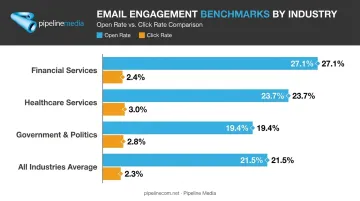
Financial Services and Healthcare both outperform the average, proof that even compliance-heavy industries can build lists that engage. An engaged list gives you a direct line to prospects and clients without a third-party algorithm deciding who sees your message. For companies that manage high-volume outreach, that direct line is often easier to maintain through a managed email broadcasting service than through in-house tools alone.
Why You Should Never Buy an Email List
There's a real difference between a purchased or rented list and one you've grown organically. Purchased contacts never asked to hear from you. That single fact creates a cascade of problems.
The risks stack up fast:
- Poor engagement – recipients don't recognize your brand and ignore or delete your emails
- Spam complaints – annoyed recipients report you, which damages your sender score
- Sender reputation damage – ISPs start filtering your emails straight to spam folders
- Potential blacklisting – severe reputation damage can get your domain blocked entirely
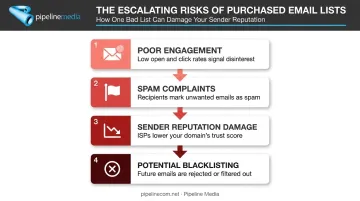
Validity specifically flags high bounce rates, spam traps, and low engagement as common outcomes of purchased-list sending. Most email service providers, including Mailchimp and Constant Contact, explicitly prohibit purchased or scraped lists in their terms of use.
There's also a legal angle worth understanding. The FTC clarifies that CAN-SPAM has no general opt-in requirement, so buying a list isn't automatically illegal under U.S. federal law. But it's not a safe harbor either. Purchased lists frequently contain addresses harvested illegally. Others belong to people who already opted out of that exact sender — sending to them can trigger real violations. Your ESP's rules will likely shut you down before the law does anyway.
This is where a managed approach pays off. Pipeline Media's email broadcasting service builds compliance and unsubscribe management directly into every campaign, so clients avoid these exact pitfalls while still reaching inboxes at scale.
Proven Strategies to Build Your Email List From Scratch
No single tactic works for every business. The strongest lists come from combining several methods and testing what resonates with your specific audience.
Capture Emails With Smart Website Opt-Ins
Sign-up forms come in a few flavors: embedded forms on your homepage, pop-ups, and fly-outs that appear as visitors scroll or attempt to exit.
Pop-ups genuinely move the needle. Omnisend's 2025 analysis of 1.24 billion popup displays found an average conversion rate of 2.1%, with mobile-only popups converting at 2.2% compared to 1.4% for desktop-only versions.
Beyond your homepage, add opt-in checkboxes at:
- Checkout pages (with a clear reason to subscribe, not just a bare checkbox)
- Thank-you pages after a purchase or download
- Within blog posts, tied to relevant content upgrades
Offer a Compelling Reason to Subscribe
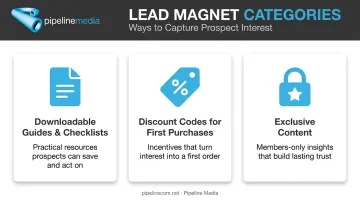
"Just subscribe to our newsletter" rarely convinces anyone. People need an incentive. Lead magnets solve this by giving visitors something valuable in exchange for their email:
- Downloadable guides or checklists
- Discount codes for first purchases
- Exclusive content not available elsewhere
The stronger and more specific the lead magnet, the higher your conversion rate at the opt-in point.
Leverage Social Media, Referrals, and Offline Channels
Your social followers are warm leads sitting on someone else's platform. Move them onto your owned channel by:
- Adding sign-up links in bios and embedded forms on Facebook pages
- Running referral programs that reward existing subscribers for bringing in new ones
- Collecting emails at in-person events, trade shows, or checkout counters
When organic tactics need a boost, paid acquisition works as an accelerant. Targeted PPC or social ads driving traffic to a dedicated landing page can meaningfully speed up growth, especially for launching a new offer.
Choose the Right Opt-In Method
How someone joins your list matters just as much as how they found you. There are three approaches:
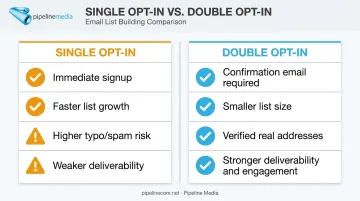
- Single opt-in – the address joins immediately after form submission, no confirmation required. Fastest growth, but typos and unauthorized signups can slip through.
- Confirmed opt-in – the subscriber must click a link in a confirmation email before joining. Validates the address is real and wanted.
- Double opt-in – the term most platforms use interchangeably with confirmed opt-in, since both require form submission plus email confirmation.
Litmus notes that single opt-in lowers friction and produces a larger list, which can mean more total opens and clicks in raw numbers.
Double opt-in generally wins on quality, though. Every address is verified, which translates to stronger engagement relative to list size, fewer spam complaints, and better long-term deliverability.
If your industry is compliance-sensitive, like finance or healthcare, double opt-in is worth the smaller starting list. Managing that verification process at scale, alongside unsubscribe requests and deliverability monitoring, is exactly where most in-house teams start feeling stretched thin—which is why many businesses hand bulk email execution to a dedicated partner.
Best Practices to Keep Your Email List Healthy
Growing your list is only half the job. Keeping it clean is what protects your deliverability for years to come, and it's often the step businesses skip.
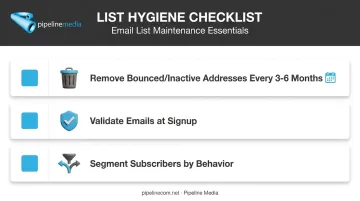
List hygiene checklist:
- Remove bounced addresses, role-based accounts (like info@ or sales@), and long-term inactive subscribers every 3-6 months
- Validate email addresses at the point of signup to catch typos and spam traps before they enter your system
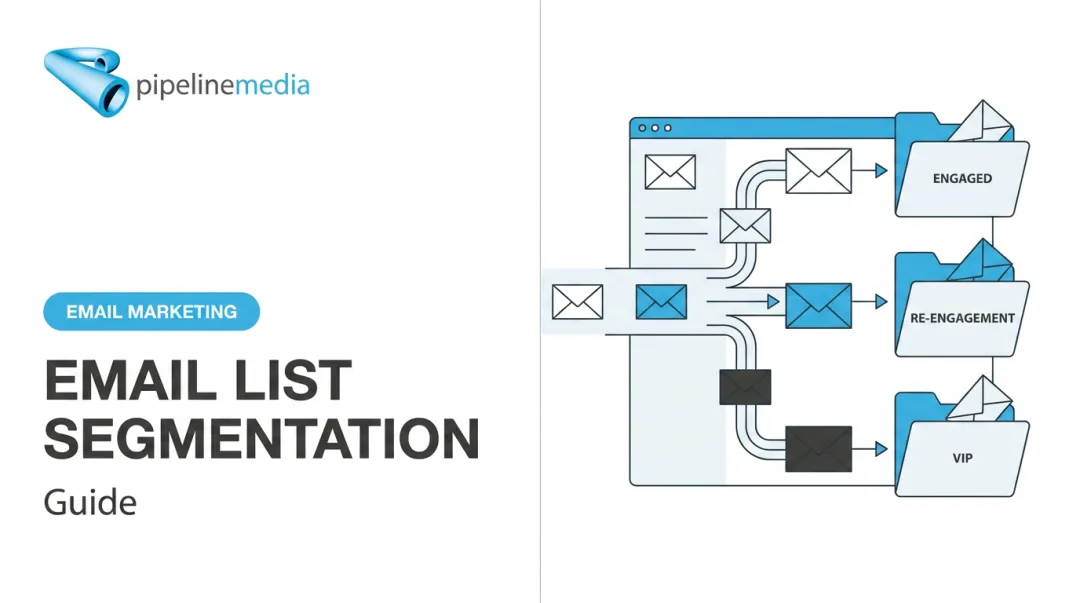
- Segment subscribers by behavior, demographics, or engagement level so your messaging stays relevant
A clean, well-segmented list is only as valuable as the first impression it receives. A welcome email or short welcome series sets expectations immediately, covering what you'll send, how often, and what value the subscriber will get. This first impression shapes engagement for months afterward.
Finally, monitor your core metrics regularly:
- Open rate – are people even seeing your subject lines?
- Click rate – is your content compelling enough to act on?
- Unsubscribe rate – a spike here signals a mismatch between expectations and delivery
Catching problems early in these numbers beats discovering a deliverability crisis six months later, which is exactly why compliance and unsubscribe management are built into any well-run email broadcasting program.
Let Pipeline Media Handle Your Email Campaigns
Once your list is built, sending campaigns manually becomes its own time-consuming job. This is where Pipeline Media's Email Broadcasting service fits in.
Pipeline manages the entire campaign process. You send your list and your message; Pipeline handles distribution at a scale of millions of emails per hour, with most jobs live within 60-90 minutes of submission.
What you get with the service:
- Tracking reports: See undeliverable emails, opens, and which links and images recipients engaged with
- Compliance handling: Pipeline manages your unsubscribe system so opt-outs and bounces don't linger on your list
- Merge field personalization: Segmented audiences each receive tailored messaging at scale
This compliance handling reinforces the list hygiene practices covered earlier, since bounced addresses and opt-outs get processed automatically rather than piling up.
Pipeline has worked with organizations across Financial Services, Healthcare, and Government for over 20 years — industries where deliverability and compliance carry real regulatory weight. That track record shows up in how requests get handled: every campaign gets a response from a real person within minutes, not an automated ticketing queue.
If your list is ready and manual sending is eating your team's time, Pipeline Media's email broadcasting is built to take that off your plate.
Frequently Asked Questions
What is an email list?
An email list is a permission-based collection of email addresses from people who explicitly opted in to receive communications from your brand. It's used to reach prospects and customers directly, without relying on a third-party platform.
Is it illegal to buy an email list?
Not automatically under U.S. federal law, since CAN-SPAM has no general opt-in requirement. But most email service providers prohibit purchased lists in their terms, and sending to them risks CAN-SPAM violations if the list includes prior opt-outs or illegally harvested addresses.
How long does it take to build an email list from scratch?
Timelines vary based on your website traffic and how compelling your incentive is. Most businesses see steady, engaged growth after several months of consistent effort across multiple acquisition channels.
What is a good size for an email list?
Size matters less than engagement quality. A smaller list of highly engaged subscribers will consistently outperform a massive list where most people never open your emails.
How often should I clean my email list?
Every 3-6 months is the recommended cadence. This removes bounced addresses, long-term inactive subscribers, and role-based accounts that drag down your engagement metrics.
What's the difference between single and double opt-in?
Single opt-in adds subscribers immediately after signup, growing your list faster but with less verification. Double opt-in requires an email confirmation click, producing a smaller but higher-quality list with better long-term deliverability.